
This page is part of The Argument Field Manual (tAFM)—a living field guide to bad reasoning, rhetorical tricks, semantic sludge, broken mental models, evidence games, loaded language, tribal cognition, and other machinery that makes public thinking stupid.
TAFM → The Move → Aggressive Moves → Moral & Reputational Attacks Guide
This page collects a closely related family of concepts. Use it to identify what you’re seeing in the wild, then follow any linked full articles for deeper autopsies, examples, and repair strategies.
These moves seek victory by contaminating the person rather than inspecting the argument. They substitute moral suspicion, reputational damage, or alleged motives for analysis of the claim itself.
⠀
Table of Contents \ Moral & Reputational Attacks
Bad-Faith Accusation \ Claiming dishonesty to avoid the claim.
Mind-Reading Attack \ Claiming to know the hidden bad intent.
⠀
• Bad-Faith Accusation
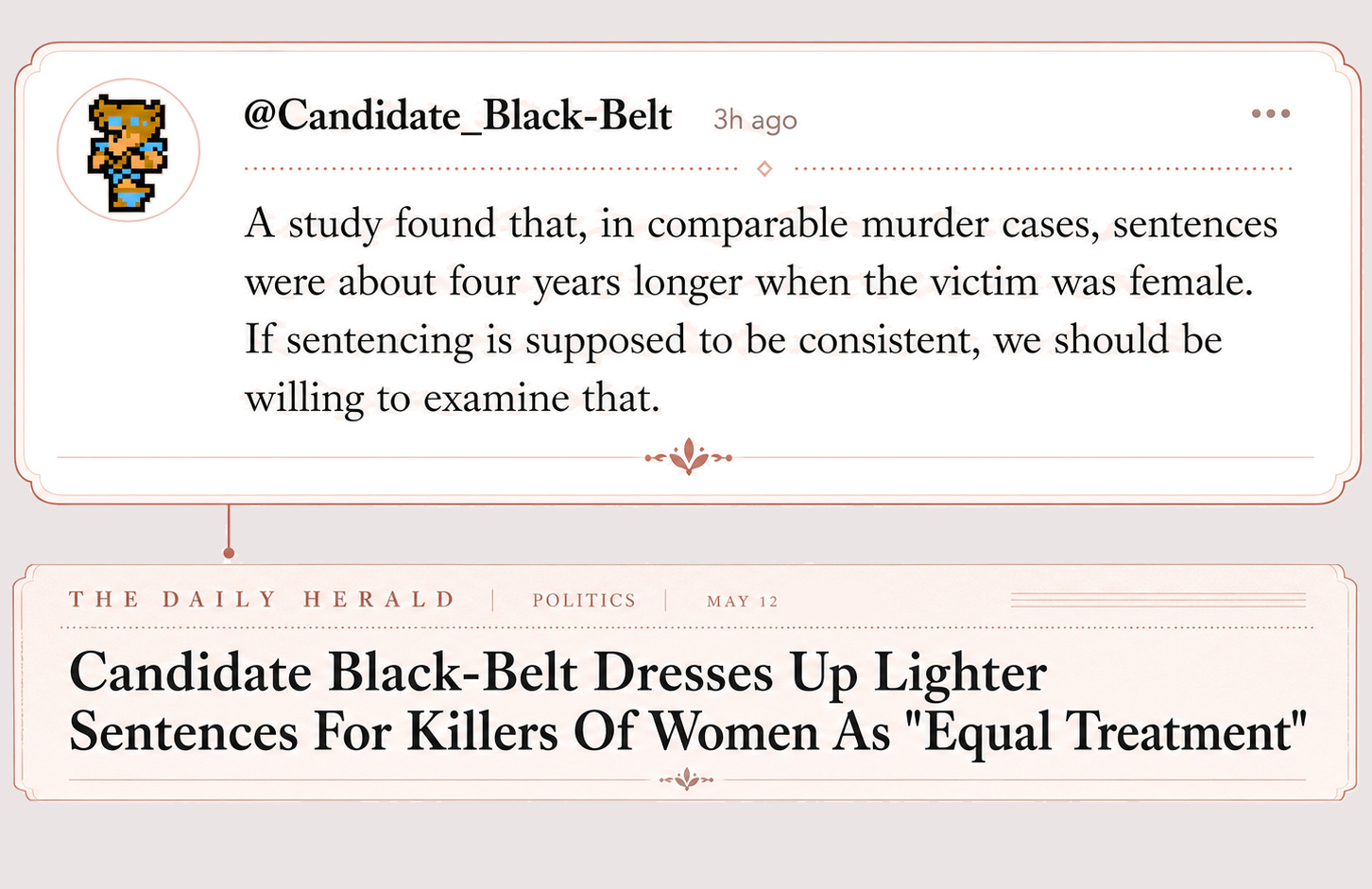
A bad-faith accusation claims dishonest intent in order to avoid answering the argument itself.
What’s happening here?
The claim has been moved off the inspection table and replaced with a character trial. Instead of answering what was said, the accuser claims to know the hidden corruption behind why it was said.
Maybe the person really is acting in bad faith. That happens. We have all met humans. But “bad faith” is not a magic phrase that turns mind-reading into evidence.
⠀
You’ll recognize this when…
The conversation shifts from:
“Is this claim true?” to “What kind of person would say this?”
⠀
It often arrives right when the claim becomes inconvenient, especially when answering it would require admitting that an enemy has made a structurally valid point. Unacceptable. Straight to motive jail.
⠀
Why it matters:
Bad-faith accusations are sometimes accurate, but they are also wonderfully convenient. They let people skip the difficult work of argument inspection and go directly to reputational quarantine.
This is how groups preserve bad beliefs. They do not have to refute the objection if they can make asking it socially radioactive.
⠀
It’s a Bad-Faith Accusation when:
There’s an accusation of dishonesty or insincerity, not merely error.
The accusation is treated as reason to avoid the claim.
The accuser claims to know the person is pretending, hiding, or arguing dishonestly.
The conversation shifts from “Is this claim true?” to “Can this person be trusted?”
The evidence is mostly suspicion, convenience, tribal odor, or “come on, we all know.”
⠀
It’s NOT a Bad-Faith Accusation when:
The claim is still inspected separately from the person’s sincerity.
The criticism is about the argument’s structure, not the person’s honesty.
Someone says the argument is wrong, weak, confused, or misleading without claiming dishonest intent.
⠀
⠀
Common escalations:
Denial becomes proof: “See? Now you’re pretending.”
Clarification becomes cover: “Now you’re trying to make it sound innocent.”
Evidence demand becomes stalling: “You know exactly what you’re doing.”
The accusation becomes unfalsifiable: anything you say is treated as part of the act.
⠀
Repair move:
Is the claim true?
What evidence shows dishonest intent?
Inspect #1 first. Go to #2 only if the evidence requires it.
⠀
Related concepts:
Motive Attack, Mind-Reading Attack, Motive Parking, Steel vs Scabbard Check, Label-and-Convict
☝️ Up to TOC 👆
⠀
• Mind-Reading Attack
A mind-reading attack claims to know someone’s hidden intent, motive, belief, or meaning, effectively avoiding inspecting what they actually said.
⠀
What’s happening here?
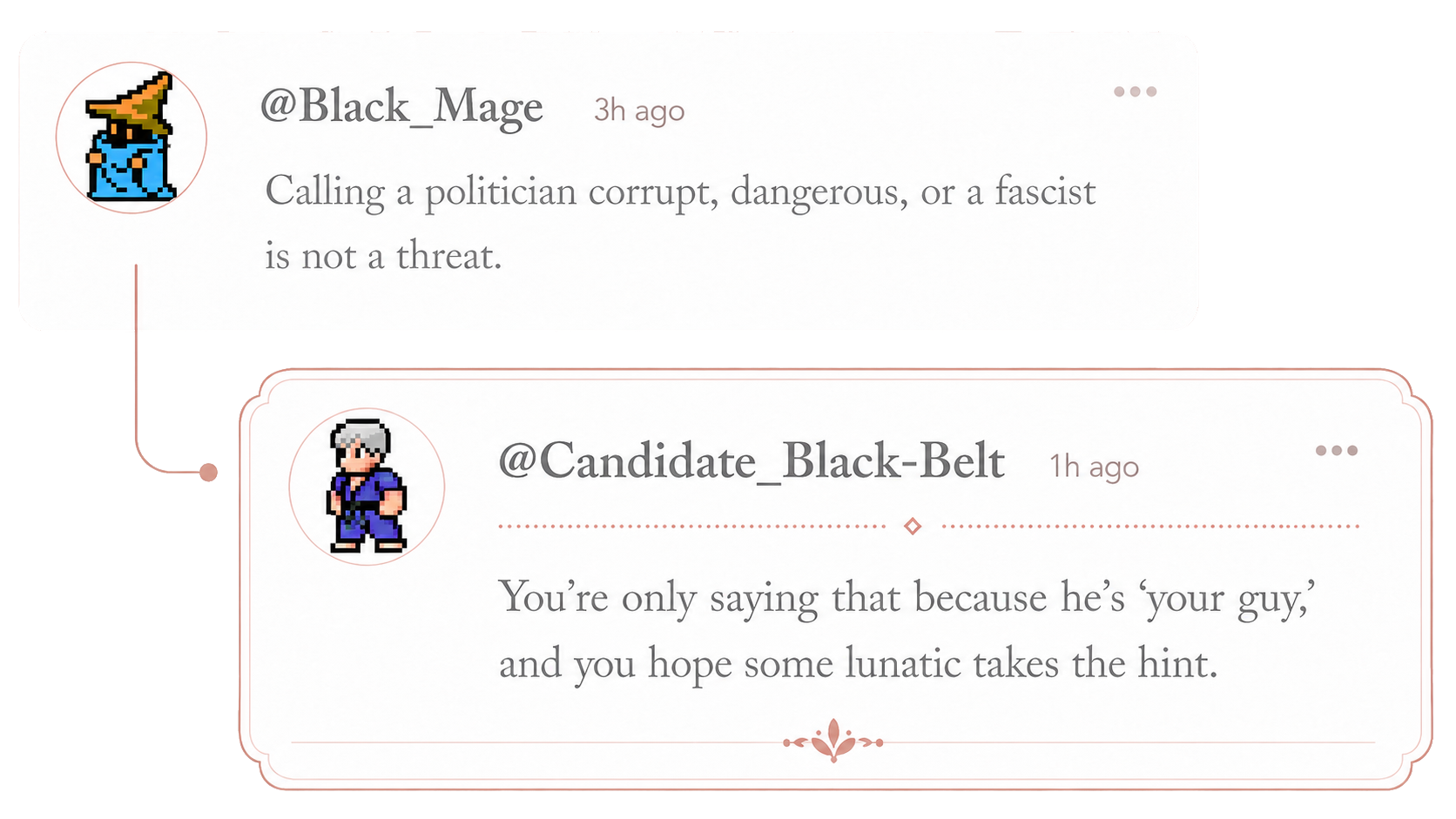
The claim makes a category distinction: criticism is not the same thing as threat.
The reply does not answer that distinction. It invents a hidden wish inside the speaker: you want someone hurt, and you are hoping your words become a signal. The argument has been moved from public claim to private interior.
Maybe the person really does have some ugly motive.
That happens. Humans have basements.
But motive is not a substitute for argument. Even a guilty mind does not change whether the stated claim is true—the statement still has to be inspected on its own terms.
⠀
Why it matters:
Mind-reading attacks make suspicion do the work of evidence. Once hidden intent becomes the real issue, the claim can be ignored, denial can be treated as concealment, and the accused person gets trapped defending an imaginary interior instead of the argument they actually made.
⠀
It’s a Mind-Reading Attack when:
The target’s hidden intent or meaning is assigned, not shown.
The mind-reader treats the accusation as known fact.
The accusation damages the target’s moral standing or reputation.
The conversation shifts from claim inspection to inner-life prosecution.
The evidence is mostly suspicion, vibe, pattern-assumption, or “we all know.”
⠀
It’s NOT a Mind-Reading Attack when:
The claim itself is being distorted; that routes closer to Strawman or another Distortion Attack.
The inference is cautious, evidence-based, and left open to correction.
⠀
You’ll recognize this when…
The magic phrase is usually some version of:
“I know what you really mean.”
“That’s not what this is actually about.”
“I’m just reading between the lines.”
“You don’t really care about that.”
“People like you always mean…”
At that point, the argument has left the inspection table and entered the tiny courtroom inside the accuser’s imagination.
⠀
Common escalations:
Denial becomes proof: “Of course you’d say that.”
Clarification becomes evasion: “Now you’re trying to clean it up.”
Evidence demand becomes guilt: “You want me to prove what everyone can see.”
Pattern accusation replaces this case: “People like you always mean this.”⠀
⠀
Repair move:
Ask the mind-reader to separate three things:
What was actually said.
What hidden intent they are assigning.
What evidence supports that assignment.
If they cannot show #3, return to #1.
⠀
Related concepts:
Bad-Faith Accusation, Motive Attack, Concern-Troll Accusation, Dog-Whistle Accusation, Strawman, Character Substitution, Motive Parking.
☝️ Up to TOC 👆
