

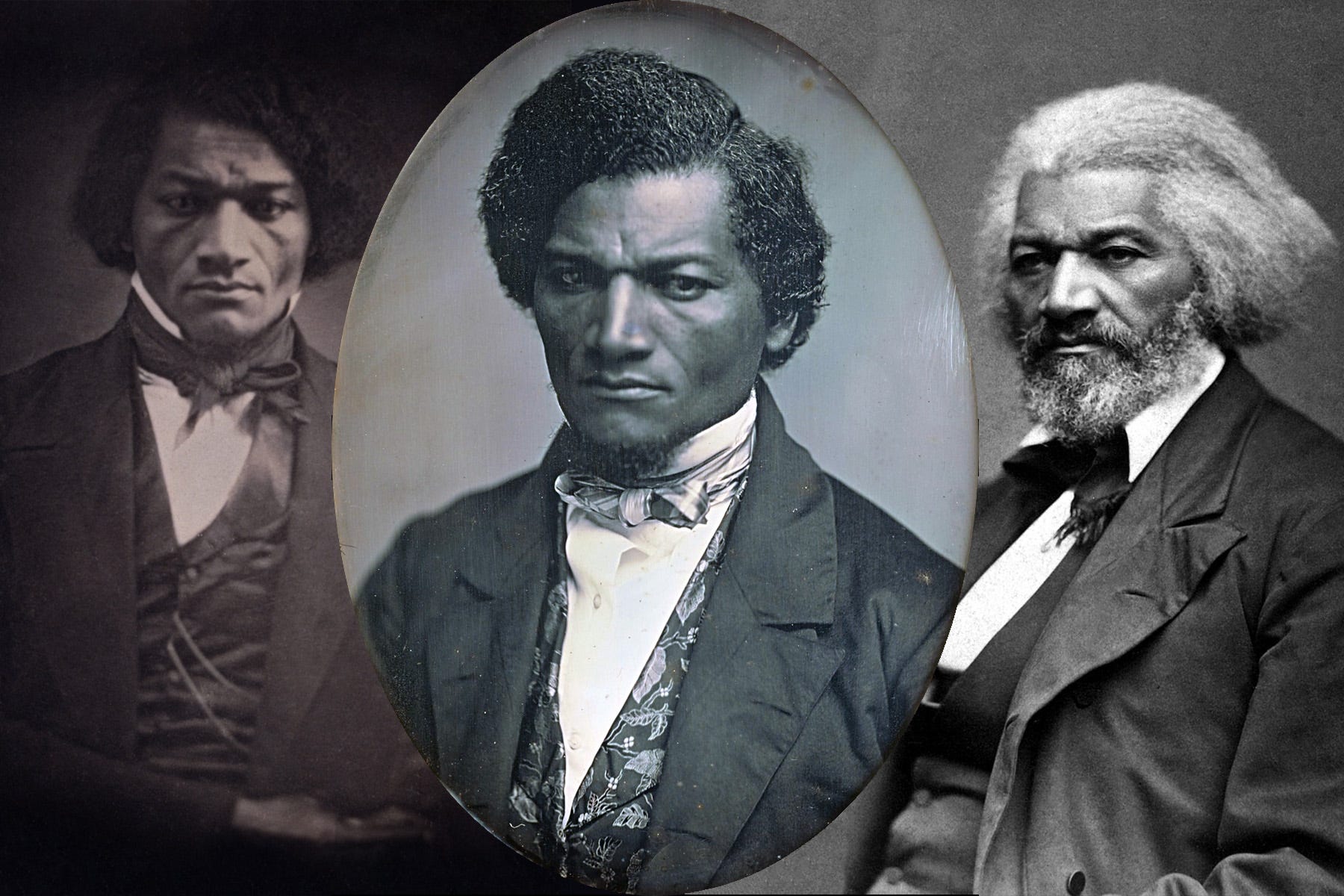
This quote from Frederick Douglass describes what it felt like for him to step outside the racist caste culture of mid-1800s America, on his first trip to Ireland in 1845.
Eleven days and a half gone, and I have crossed three thousand miles of the perilous deep. Instead of a democratic government, I am under a monarchical government. Instead of the bright, blue sky of America, I am covered with the soft, grey fog of the Emerald Isle [Ireland]. I breathe, and lo! the chattel [slave] becomes a man. I gaze around in vain for one who will question my equal humanity, claim me as his slave, or offer me an insult. I employ a cab—I am seated beside white people—I reach the hotel—I enter the same door—I am shown into the same parlor—I dine at the same table—and no one is offended.... I find myself regarded and treated at every turn with the kindness and deference paid to white people. When I go to church, I am met by no upturned nose and scornful lip to tell me, 'We don't allow niggers in here!'
— 27-year old Frederick Douglass in Ireland, 1845
⠀
This quote is one of the most vivid examples I can think of, of a lived expectation — the background assumption of how other people will treat you — that I cannot really hold in my head empathetically, because I can’t accurately simulate it. It’s too alien from my own experience. My imaginings of “what it would be like” have extremely low reliability because the reality is both so extreme and so far outside anything I’ve ever experienced.
But even trying to get close enough to imagine that mental state… is viscerally revolting. With modern sensibilities, and Douglass’s words, you can feel how innately wrong even the direction of humans owning humans is.
It’s interesting to me, how clearly that feeling can come through, despite an inability to embody myself into what he went through in my mind’s eye. I think there’s something about being broken that leads to you coming back with a steel few other men can fully grasp.
Someone’s mindset, their experiences, and their assumptions about how the world will treat them have an incredible effect on not only WHAT they think, but HOW they think. Not “think” as in right or wrong. Think as in: from what direction.
I like quotes like this because they remind me of my own distinctiveness, and the distinctiveness of every other individual mind.
Often, people in an argument are not simply disagreeing about the same thing. They are arguing from undeclared opposing directions, each passionately defending a different nuance, thinking they are arguing against each other when they are actually arguing parallel to each other.