


Bryan Jones pointed to a pattern I’ve seen, but never named: people making a point, conceding it when challenged, then moving to another point, conceding that too, until none of the individual claims survive scrutiny — but the original confidence somehow remains intact.
That is the,
Argumental Hermit Crab
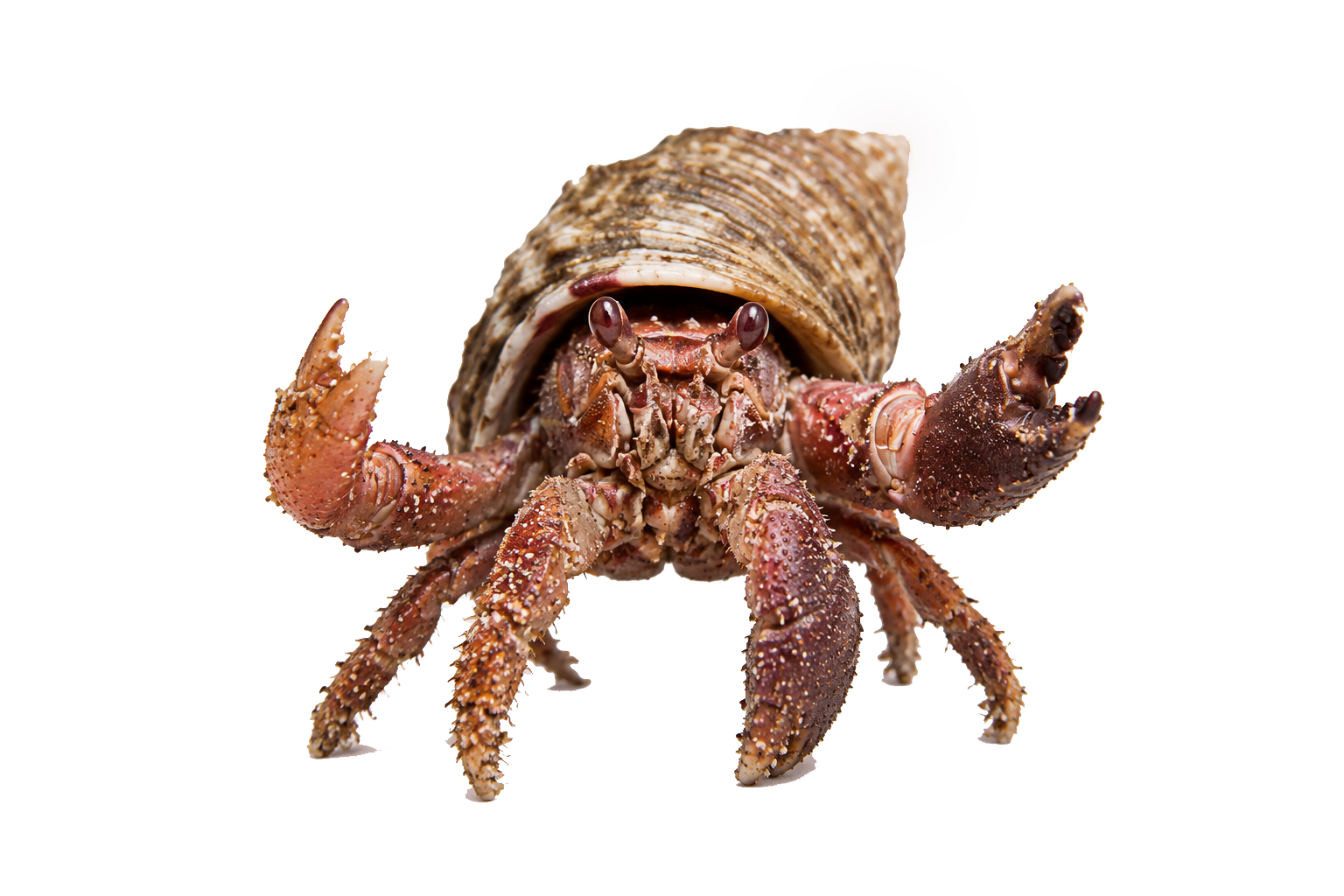
The claim keeps abandoning one shell and crawling into another whenever the current one becomes uncomfortable.
This is not exactly Goalpost Moving. In Goalpost Moving, the standard changes after it has been met. It is also not exactly Motte-and-Bailey, where a provocative claim retreats into a safer, more defensible version. The Argumental Hermit Crab is slipperier than both. Its core move is not retreating to a stronger position. It is preserving the same emotional certainty while changing which claim is supposed to justify it.
The Argumental Hermit Crab Scuttle:
You inspect Claim A.
Claim A fails.
So the argument crawls into Claim B.
You inspect Claim B.
Claim B fails.
So the argument crawls into Claim C.
Eventually, you are no longer examining a coherent argument. You are chasing a creature through a pile of discarded shells it no longer cares to defend, much less acknowledge..
The diagnostic question is simple:
After the claim changed, did the confidence change with it?
If someone’s certainty survives the collapse of every reason offered for it, then the reasons were probably never doing the real work. They were just temporary housing.
Watch for the little scuttle sideways: “Okay, maybe not that, but what about…”
A hermit crab perfectly captures the act of argument chasing instead of conviction. I've had those conversations.
Funny how we keep stumbling into similar territory from quite similar angles.
I would nest this "strategy" within two larger bins... err... nests. The broadest I am calling "deferential survivorship bias," a general symptom of which I am calling an "acknowledgment/compensation gap." There are many strategies that exploit the gap, with some of them less creative (like a politician saying "OF COURSE I know that X is true, BUT [thing that directly contradicts X being true]"). This Hermit Crab strategy seems almost like chaining these gaps together like a breadcrumb trail to nowhere.
My next post is about treating biases as errors of omission, and this is directly relevant. Making a note to share as a good example.